
A record state construction backlog is the strongest retention tool WNY engineering firms have ever had. For the engineers it’s keeping in place, that’s worth a closer look.
Every June, the calculus shifts a little.
The spring scramble to get projects moving for the construction season has settled into a rhythm. This is the stretch of the year when an engineer who’s been quietly restless finally has the bandwidth to look up and ask whether they’re where they want to be.
This year, most of them are looking up and deciding to stay.
I’ve spent more than two decades recruiting in the Western New York AEC market, and I can tell you the senior transportation talent here is more firmly planted than I’ve seen in a long time. Not because nobody’s calling. Because the work is genuinely good, and there’s a mountain of it.
That’s not a problem to solve. It’s a situation to understand — especially if you’re one of the people staying put.
The money is real, and it’s local
When people say there’s a lot of public infrastructure money in New York right now, they’re not exaggerating, and the figures aren’t abstract.
The state is funding a $34.3 billion, five-year NYSDOT Capital Plan — the largest in the agency’s history. The FY26 budget alone put nearly $7 billion toward year four of that plan, then added another $800 million on top specifically to absorb rising construction costs and keep current projects on schedule. Local roads and bridges drew close to $1.4 billion. CHIPS funding for municipal work crossed $648 million.
On top of the state plan, the Thruway Authority just approved its own $2.8 billion capital plan for 2026 through 2030: 150 bridges to replace or preserve, more than 1,500 lane miles to resurface.
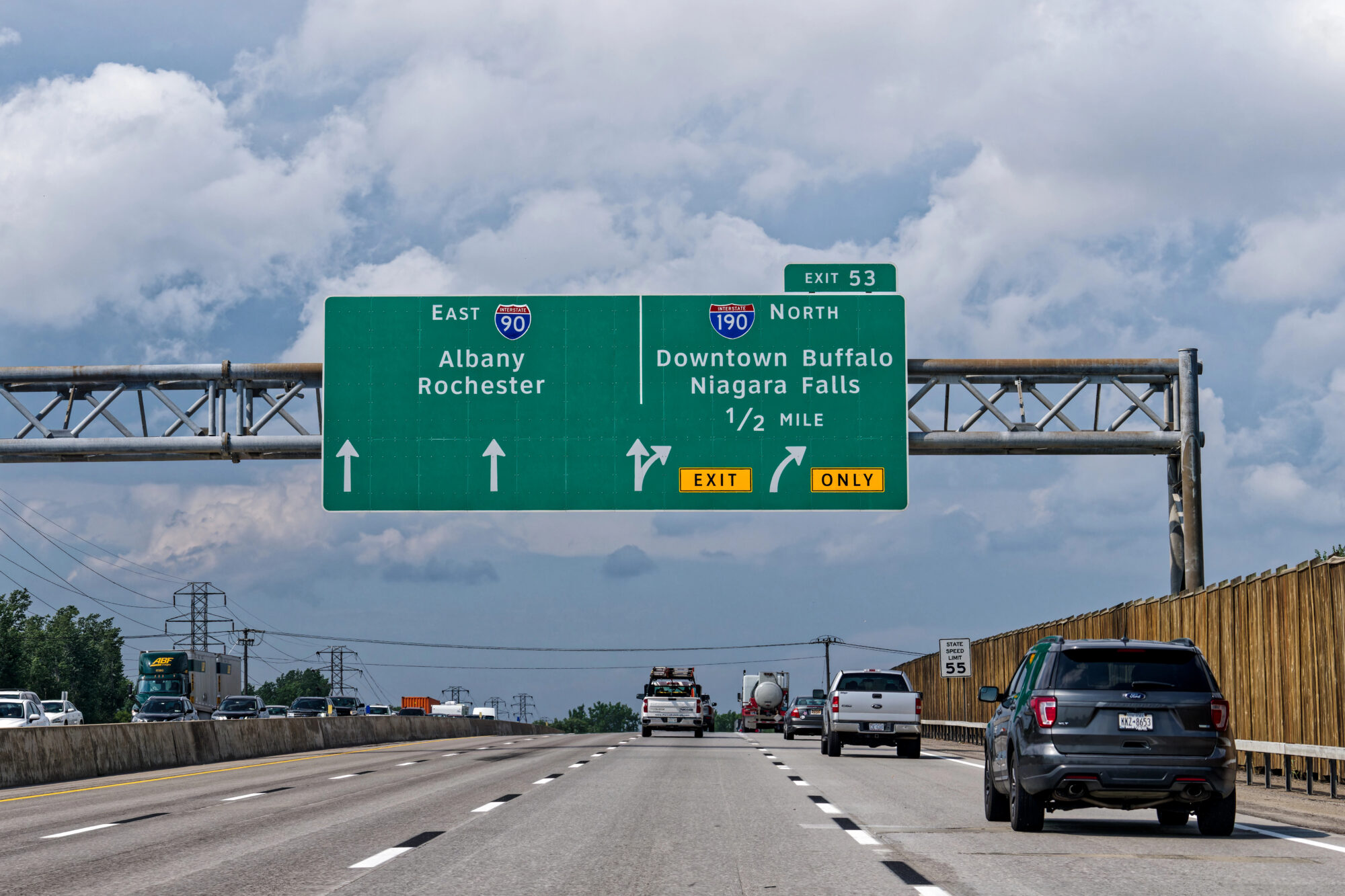
You can see it on the ground here. Pavement rehabilitation underway on the I-190 through Buffalo and on the Thruway in Cheektowaga. The Inner Loop North Transformation Project in Rochester moving through design phase. The steady drumbeat of bridge and paving work across the Thruway’s Regions 4 & 5. This isn’t a one-year bump. It’s a decade-long pipeline of publicly funded work, and public funding doesn’t flinch the way private commercial work does when financing costs climb.
For a transportation engineer, that adds up to something rare: the ability to see a major project through from design to ribbon-cutting without the ground shifting underneath you.
Why nobody’s moving
The labor math makes the picture sharper.
In the past year, the Western New York region added jobs in construction — modest growth, but growth, in a market where firms across the country report they can’t find enough qualified salaried people. The demand is here. The experienced bodies to meet it are not. Anyone who’s tried to hire a senior highway engineer in this market lately already knows how thin the bench is.
So you have a small pool of senior people, a record volume of stable public work, and firms that know exactly how hard their key engineers would be to replace. That combination doesn’t push people out the door. It locks them in.
And the engineer feels it as a good thing — because in most respects, it is. There’s a long runway. The projects are meaningful. The firm is committed. With grocery and gasoline costs where they are, the steady paycheck attached to a years-long backlog feels less like settling and more like sense.
I’m not going to argue with any of that. It’s true.
But there’s a quieter cost underneath it, and it’s worth naming.
Job security and career security are not the same thing
Here’s the distinction I’d ask you to sit with.
A backlog is the firm’s asset. Your career is yours. They overlap for a while, and then sometimes they don’t.
When you ride one large program from start to finish, you become the single best person in the region at exactly that program. That’s real expertise and it’s valuable. But “the best person at this specific multi-year project” and “the most marketable senior engineer in the regional market” are not automatically the same person. The longer you’re heads-down on one body of work, the more your skill set narrows toward it — and the less time you spend building the range that makes you the obvious choice for the next step up.
Five years of deep work on a single program can read two ways on paper. As mastery. Or as a holding pattern. Which one it becomes depends almost entirely on whether you were intentional about it.
The engineers I see make the cleanest moves into director and senior-management roles aren’t the ones who fled a bad situation. They’re the ones who stayed somewhere good and kept asking what the work was doing for them, not just what they were doing for the work.
What to do with this if you’re staying
This isn’t a case for leaving. For a lot of people, staying is the right call, and a stable firm with a deep public backlog is a genuinely good place to build.
It’s a case for staying on purpose.
Ask yourself the question: a year from now, what will I be able to do that I can’t do today? If the honest answer is “more of the same, just further along,” that’s worth a conversation — with your principal, first. Good firms would rather stretch a key engineer than lose one, yet most senior people never actually ask.
And it’s worth knowing what’s out there even when you’re not looking. Not because you should jump. Because the engineers who understand their own market value negotiate from a different position than the ones who don’t — whether they ever leave or not.
The strongest moment to take stock of your career is when nothing’s forcing you to. Right now, for most senior engineers in this market, nothing is. That’s exactly why it’s the right time.
Frequently Asked Questions
Is now a bad time to change engineering jobs in Western New York?
No — if anything, it’s a strong market for experienced transportation and civil engineers. A record state construction backlog and a regional shortage of senior talent mean firms are competing hard for the few people available. The dynamic that’s keeping engineers in place is the same one that gives a senior engineer leverage if they do decide to explore a move.
How much public infrastructure funding is actually coming to New York?
A great deal. The current NYSDOT Capital Plan totals $34.3 billion over five years — the largest in the agency’s history — with additional funding layered in through the FY26 budget for highways, bridges, and local roads. The Thruway Authority approved a separate $2.8 billion capital plan for 2026–2030. For Western New York, that translates into a multi-year pipeline of highway, bridge, and municipal work.
Why are so few engineers changing jobs right now?
Three things at once: a record backlog of stable, publicly funded work that lets engineers see long projects through; a regional shortage of senior talent that makes good people very hard to replace; and economic pressure that makes a steady paycheck attractive. Together they create strong retention — sometimes stronger than an engineer’s own career interests would suggest.
Does staying at one firm for a long time hurt your engineering career?
Not inherently. Long tenure can signal mastery and reliability. The risk is narrowing: spending years on one type of project can leave a senior engineer less marketable than their experience suggests. The difference comes down to whether you stayed intentionally and kept building range, or simply rode the backlog.
What should a transportation engineer do if they’re happy where they are?
Stay — but stay on purpose. Periodically take honest stock of what the work is building toward for you, not just the firm. Have the growth conversation with your principal before frustration sets in. And understand your own market value even when you’re not actively looking, so you’re negotiating from knowledge rather than guesswork.
Lynn writes about hiring, careers, and the talent market in Western New York’s architecture, engineering, and construction community. More at NordstromWilliams.com.
Next in this series: the most common mistake firms make when they finally do interview a senior engineer — and why it costs them the best candidates.